
Stay connected with the latest developments at Yayasan Sime Darby. Learn about the initiatives we are taking in our community and beyond.
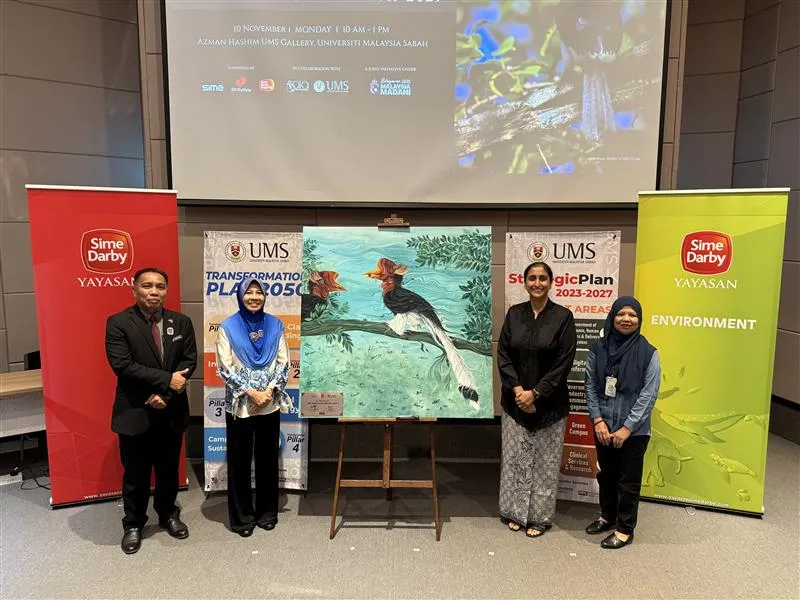
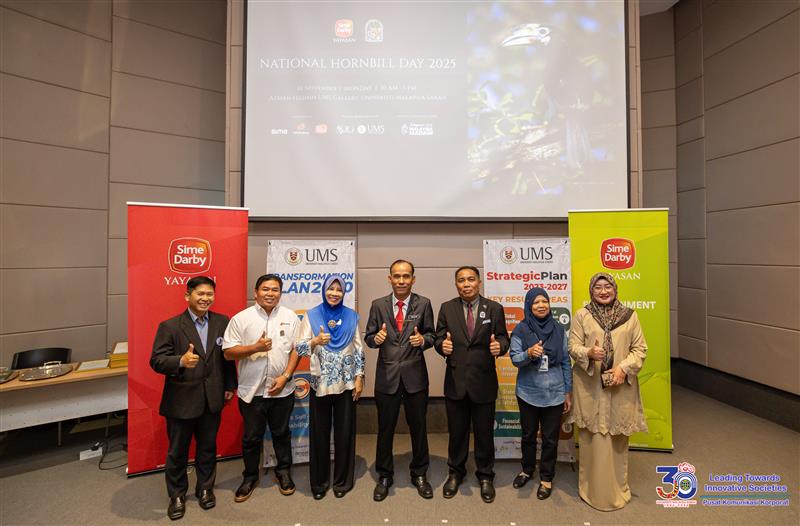
Malaysia’s second National Hornbill Day was celebrated at Universiti Malaysia Sabah (UMS) to honour the nation’s iconic hornbills and raise public awareness on the importance of their conservation. The event brought together government agencies, conservation partners and researchers, and industrial players to recognise hornbills as ecosystem engineers and the people who protect them on the ground. With the support from the MADANI Government under the Belanjawan 2025 initiative, the programme also highlights efforts to create alternative income opportunities for rural and local communities through their involvement in critical conservation work. This includes serving as hornbill guardians, where community members help monitor nests and report sightings in working landscapes—supporting conservation efforts while earning alternative income.
At the UMS gallery, partners launched two technical references for practitioners: the Fig Propagation and Caring Manual for Hornbill Management Plan in Oil Palm Plantations and the Artificial Hornbill Nest Construction Guide, to help estate teams and protected-area communities apply consistent, safe practices that benefit hornbills and local biodiversity. The celebration also featured a focused sharing session in a TED-style format with five speakers representing key pillars of hornbill conservation: Dr Ravinder Kaur (GAIA) on ecological research and conservation science; Mr Melvin Amandus (Sabah Wildlife Department) on enforcement and threats; Mrs Siti Zulaikha binti Abdul Wahab (Ministry of Natural Resources and Environmental Sustainability) on policy advocacy and implementation; Prof. Dr. Abd. Hamid bin Ahmad (UMS) on coexistence in plantation settings; and Ms. Anastasia Anak Jimmy (UMS) on youth advocacy. Together, their perspectives underscored how science, enforcement, policy, sustainable plantation practices and youth leadership are aligned in support of hornbill protection.
Prof. Datuk Dr. Kasim Haji Mansor, Vice-Chancellor of UMS, said universities have a direct role in building conservation leadership among young people. “Through National Hornbill Day, UMS students and Hornbill Ambassadors gain exposure to field-ready guidance and real roles that connect learning with Sabah’s landscapes.”
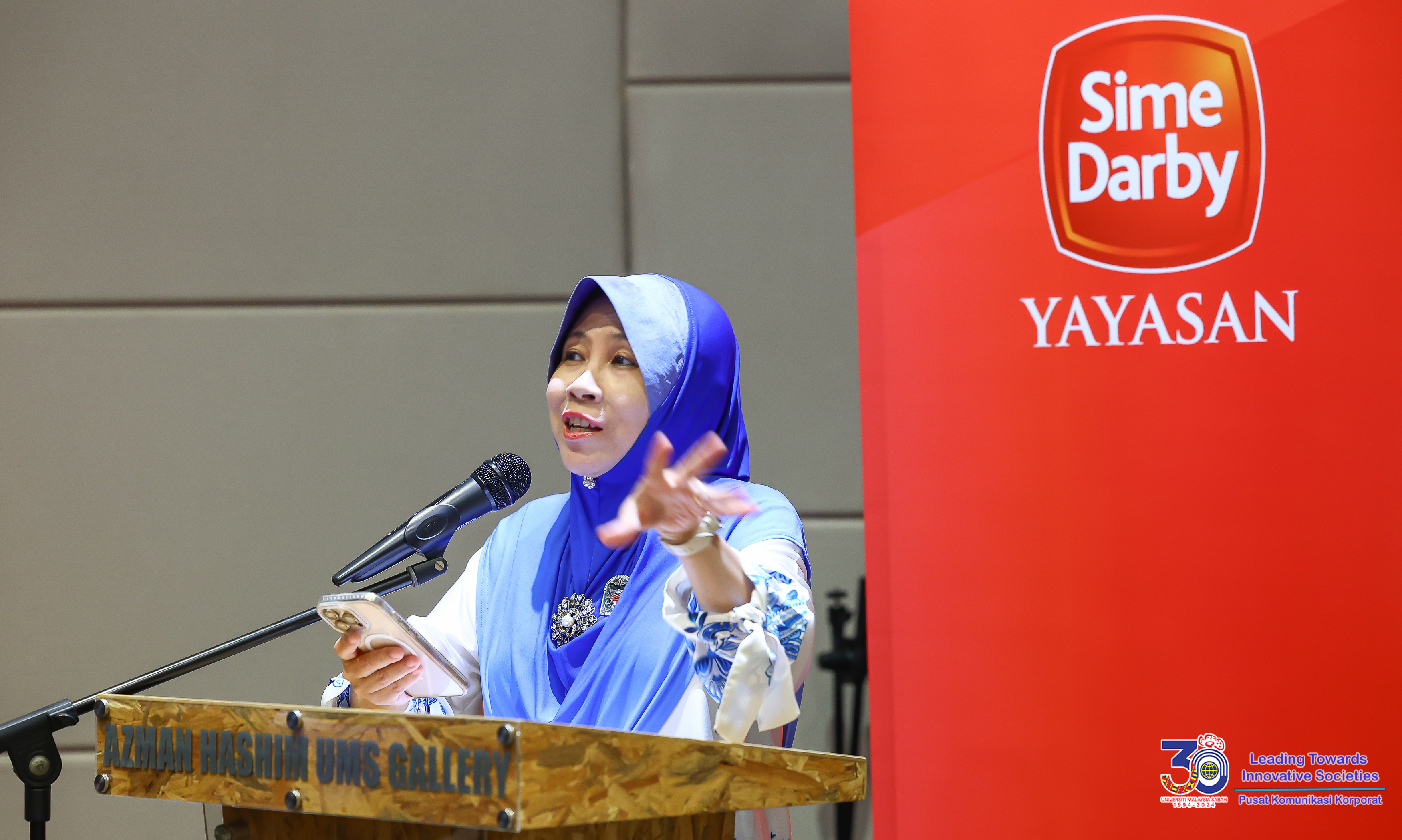
Dr. Hajah Yatela Zainal Abidin, Chief Executive Officer of Yayasan Sime Darby (YSD) expressed her pride in witnessing hornbill conservation efforts evolve from plans on paper to real, impactful action on the ground in collaboration with Explore Gaia Enterprise (GAIA) and SD Guthrie Berhad — made possible through clear technical guidance and the dedication of empowered local communities. “With dedicated local champions, hornbill conservation is beginning to flourish across their habitat areas, estates and schools. Yayasan Sime Darby remains committed to working alongside GAIA, SD Guthrie, and other partners across the country to restore native food tree species, safeguard critical nesting sites, and strengthen community capacity for long-term conservation impact.”
Delivering the keynote, Tuan Mohd Soffian Abu Bakar, Director of the Sabah Wildlife Department (SWD), emphasised consistent standards across agencies, estates and communities. “The Sabah Wildlife Department will prioritise a formal review of hornbill protection under the Wildlife Conservation Enactment 1997, with the intention of proposing a conservation status upgrade from Schedule 2 to Schedule 1. In parallel, we shall continue to support ongoing research and conservation on hornbill species with our partners in the Lower Kinabatangan Wildlife Sanctuary”.
Over the past four years, YSD, SD Guthrie and GAIA, have collaborated on a comprehensive conservation programme for hornbill protection, with support now extended until December 2026. Through this collaboration, partners have identified and monitored hornbill nests, trialled artificial nest boxes and cavity restoration, propagated hornbill-preferred food plants, and developed standard operating procedures (SOPs) for artificial nest boxes and fig propagation together with a hornbill management plan for oil palm estates. SD Guthrie Damai Estate in Sarawak and Lavang Estate in Sabah serve as the key implementation sites where these measures are applied and refined, demonstrating how a working plantation landscape can support hornbill conservation.
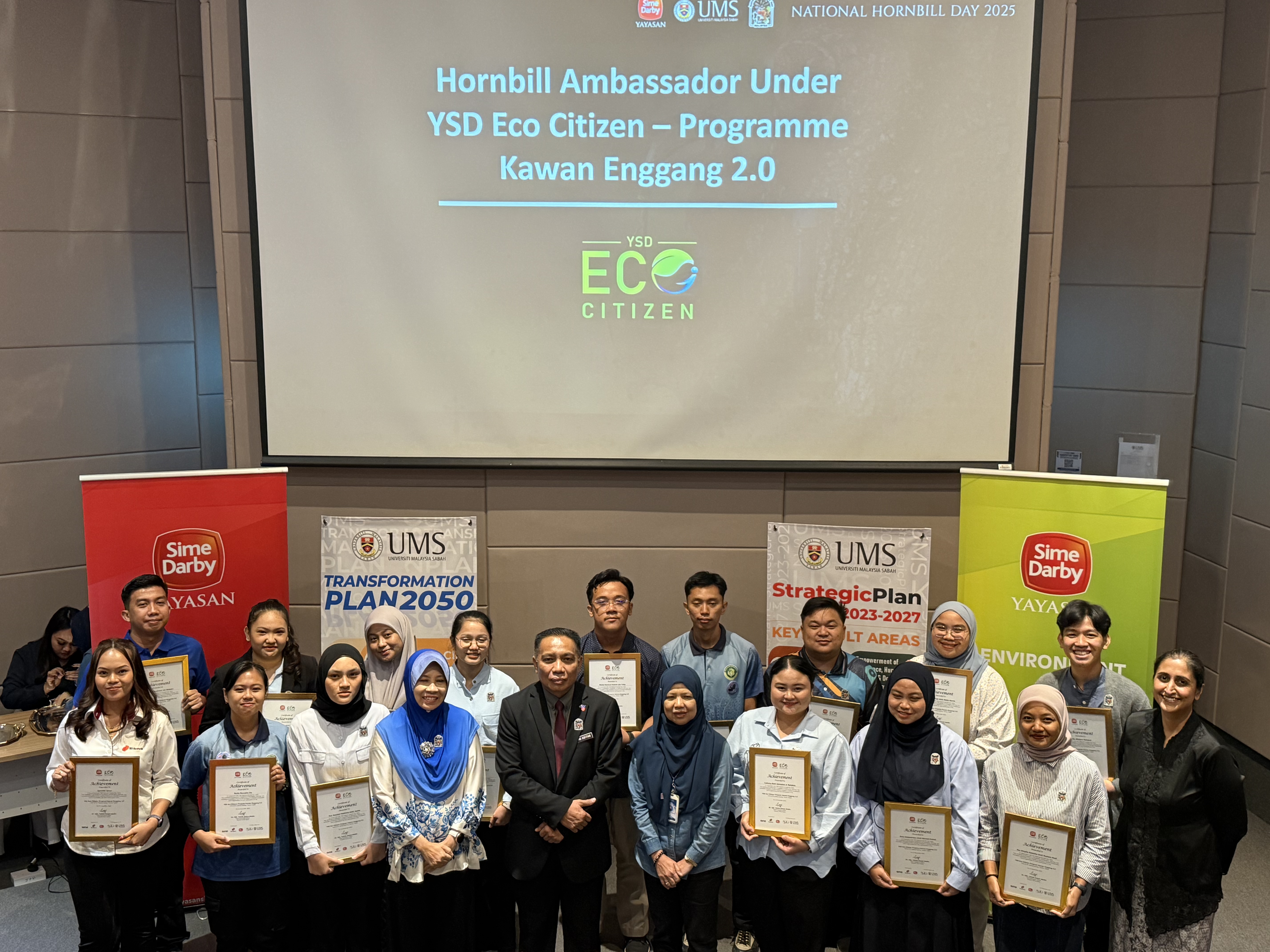
The event also recognised 31 certified Hornbill Ambassadors, comprising employees from SD Guthrie Sabah Region and students from UMS, for successfully completing outreach and coexistence training. Equipped with modules on hornbill ecology, the importance of their surrounding ecosystems, and an introduction to ESG impact, the cohort is now ready to commence outreach activities at SK Ladang Sapong, Tenom, under the YSD Eco Citizen – Program Kawan Enggang 2.0. Through this initiative, ambassadors will lead engaging sessions for students and teachers, promoting hornbill conservation awareness and advocacy through creative artistic expression. This will be followed by estate briefings and community awareness activities across Sabah.
Sabah stands at the heart of YSD’s conservation efforts, receiving over RM96 million across 19 projects since 2010 — nearly half of the RM221 million YSD has invested in environmental conservation nationwide. These initiatives span forest rehabilitation, species conservation, environmental education and anti-poaching. Sabah currently implements three distinct State Action Plans for the conservation of the Proboscis Monkey, Bornean Banteng, and Sunda Clouded Leopard. These action plans, spanning from 2019 to 2028, were initiated with the vital support of YSD and are designed to safeguard the long-term survival of these endangered species across key habitats in Sabah.
- Bukit Piton Forest Reserve reforestation: In Bukit Piton, the Sabah Forestry Department with SD Guthrie and YSD had restored 5,400 hectares of heavily degraded forest since 2008, with YSD joining in 2010. Partners have planted about 300,000 trees from more than 95 indigenous species, enabling reclassification to a Class I Protection Forest Reserve and supporting the return of orangutans, with surveys showing high nest abundance and an estimated 400 orangutans in the reserve. The programme also created jobs for 30 Segama community members, with RM25 million contributed by YSD and SD Guthrie alongside on-ground manpower.
- Bornean Sun Bear Conservation Centre (BSBCC): Between 2012-2024, YSD committed RM5.69 million to support BSBCC in Sepilok, Sabah, including the construction of key facilities, operational and rehabilitation costs, and critical assistance during the COVID-19 period. This support has enabled the care and rehabilitation of 44 rescued sun bears, the release of several individuals back into the wild, and extensive public outreach, including more than 9,000 students reached and over 170,000 visitors engaged since reopening. A matching grant facilitated through the Ministry of Finance further strengthened education, outreach and soft-release infrastructure, making BSBCC a reference point for science-based, community-engaging species conservation in Malaysia.
- Human–Orangutan Coexistence: Building on Bukit Piton, YSD with South East Asia Rainforest Research Partnership (SEARRP) following earlier work with PONGO Alliance, leads a human-orangutan coexistence programme that translates research into practical guidance and training estates and local communities. The programme supports systematic monitoring across approximately 20,000 hectares in Kinabatangan and is extending to a further 10,000 hectares in Sugut and Ulu Segama, promoting best practices for managing encounters and safeguarding key habitat areas. As part of these on-ground measures, about 80 hectares have been restored with 4,000 native trees to strengthen habitat linkages, complemented by scholarships, training and field placements to build local expertise. expertise. expertise.
- Frontline protection: A three-year RM3.8 million sponsorship from 2022 to 2025 supports the Sabah Wildlife Department’s Rapid Response Teams (RRT) to combat wildlife poaching and illegal trade. This complements earlier YSD support for the expansion of the Sabah Forestry Department’s PROTECT Unit, reinforcing efforts against wildlife crime.
- Forest restoration and rare species recovery: Collaboration with the Tropical Rainforest Conservation and Research Centre (TRCRC) to germinate more than 35,000 seedlings of endangered tree species for replanting in priority landscapes.
- Sapong Estate Restoration: Led by the Faculty of Tropical Forestry, UMS, this programme rehabilitates 10 to 15 hectares of degraded forest and riparian buffer within the Sapong Estate oil palm landscape. It tests mixed-method restoration, approaches to enhance biodiversity and carbon storage, increase food resources for frugivores such as orangutans and hornbills, and build local and student capacity in forest restoration. The findings will be consolidated into an E-manual for plantation companies and the public, supported by academic publications, stakeholder workshops and short documentaries to share practical guidance on ecological restoration in oil palm landscapes.
Together, these efforts provide a strong foundation for hornbill conservation and reflect a long-term, landscape-scale commitment to safeguarding Sabah’s biodiversity while strengthening the resilience and well-being of local communities.